
The Empathy Compass
On sale
19th November 2026
Price: £22.99
Selected:
Paperback / ISBN-13: 9789063699017
Empathy is everywhere. It’s celebrated as essential to human-centred design, social innovation, policymaking, and organisational change. Yet in practice, it is often reduced to a tool or used to confirm what we already believe.
The Empathy Compass challenges this limited view. It reframes empathy not as a soft skill or checklist, but as a systemic, relational, and ethical orientation.
In complex societal challenges such as healthcare reform, climate transition, ageing, and digital governance, empathy is never neutral. It shapes whose voices are heard, what counts as evidence, and which directions are taken.
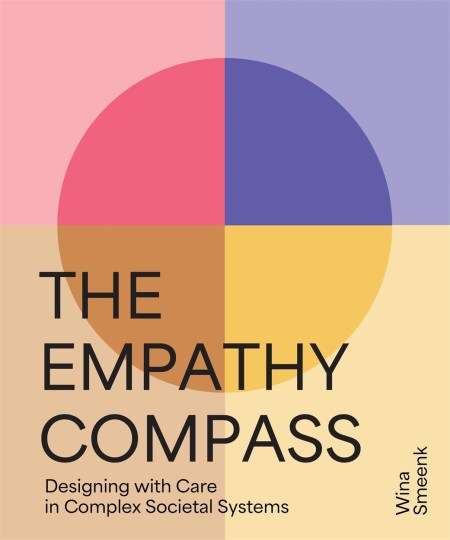
At the centre of the book is the Empathy Compass, a four-quadrant framework that helps designers, researchers, policymakers, and organisational leaders position themselves more consciously. Rather than forcing diverse perspectives into a single narrative, it enables readers to work with tension, difference, and complexity.
Through clear conceptual grounding and three in-depth case studies, the book shows how shifting perspective transforms how problems are framed, who is included, which interventions are developed, and how impact is defined.
The Empathy Compass addresses both professional practice and everyday experience, offering a way to navigate empathy more consciously, whether it comes too easily or not at all. It offers language and structure to balance involvement with reflection, care with analysis, and conviction with openness.
Physically embedded as a fold-out model, the compass must be unfolded, reminding readers that empathy takes space, time, and deliberate orientation.
The Empathy Compass challenges this limited view. It reframes empathy not as a soft skill or checklist, but as a systemic, relational, and ethical orientation.
In complex societal challenges such as healthcare reform, climate transition, ageing, and digital governance, empathy is never neutral. It shapes whose voices are heard, what counts as evidence, and which directions are taken.
At the centre of the book is the Empathy Compass, a four-quadrant framework that helps designers, researchers, policymakers, and organisational leaders position themselves more consciously. Rather than forcing diverse perspectives into a single narrative, it enables readers to work with tension, difference, and complexity.
Through clear conceptual grounding and three in-depth case studies, the book shows how shifting perspective transforms how problems are framed, who is included, which interventions are developed, and how impact is defined.
The Empathy Compass addresses both professional practice and everyday experience, offering a way to navigate empathy more consciously, whether it comes too easily or not at all. It offers language and structure to balance involvement with reflection, care with analysis, and conviction with openness.
Physically embedded as a fold-out model, the compass must be unfolded, reminding readers that empathy takes space, time, and deliberate orientation.