
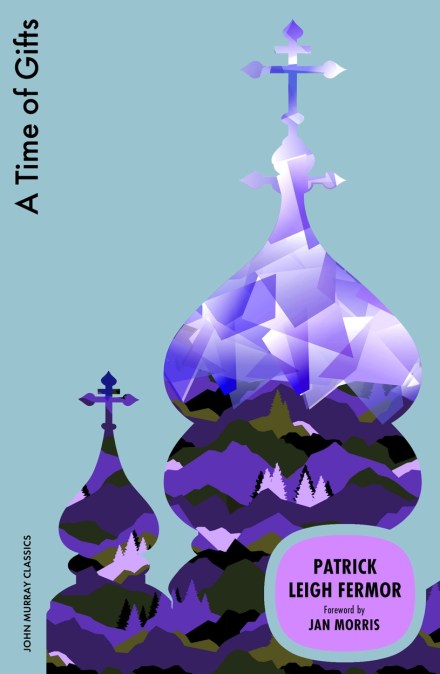
A Time of Gifts
On sale
16th July 2026
Price: £12.99
Genre
20th Century / Autobiography: General / Europe / Travel & Holiday
WITH A FOREWORD BY JAN MORRIS
‘A treasure chest’ Spectator
‘A masterpiece’ William Dalrymple, Financial Times
In 1933, aged eighteen, Patrick Leigh Fermor set out on his ‘great trudge’, a year-long journey by foot from the Hook of Holland to Istanbul. Three decades later he wrote A Time of Gifts, the sparklingly original account of the first part of this youthful adventure. Alone, carrying only a rucksack and a small allowance, he travelled through the Low Countries, up the Rhine, through Germany, down the Danube, through Austria and Czechoslovakia, and as far as Hungary.
Hailed as a masterpiece, A Time of Gifts is in part a coming-of-age memoir, but also a rich and compelling portrait of a continent that – despite its resplendent domes and monasteries, great rivers and grand cities – was soon to be swept away by war, modernisation and profound social change.
‘Rightly considered to be among the most beautiful travel books in the language’ Independent
‘A treasure chest’ Spectator
‘A masterpiece’ William Dalrymple, Financial Times
In 1933, aged eighteen, Patrick Leigh Fermor set out on his ‘great trudge’, a year-long journey by foot from the Hook of Holland to Istanbul. Three decades later he wrote A Time of Gifts, the sparklingly original account of the first part of this youthful adventure. Alone, carrying only a rucksack and a small allowance, he travelled through the Low Countries, up the Rhine, through Germany, down the Danube, through Austria and Czechoslovakia, and as far as Hungary.
Hailed as a masterpiece, A Time of Gifts is in part a coming-of-age memoir, but also a rich and compelling portrait of a continent that – despite its resplendent domes and monasteries, great rivers and grand cities – was soon to be swept away by war, modernisation and profound social change.
‘Rightly considered to be among the most beautiful travel books in the language’ Independent
Reviews
[Fermor's] gloriously ornate account of that epic journey is a classic of what we might call the 'literature of the leg'