
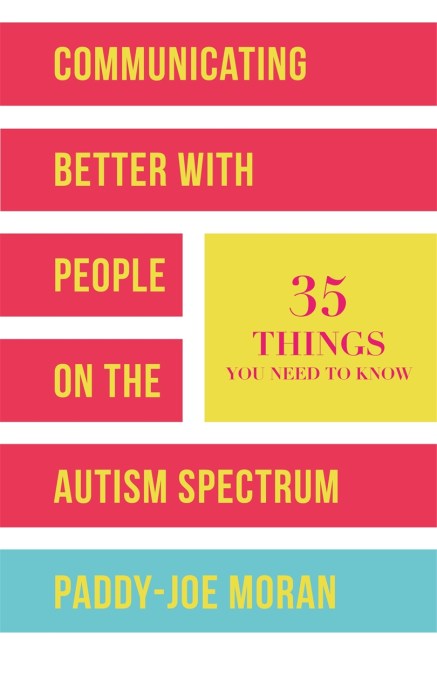
Communicating Better with People on the Autism Spectrum
On sale
18th August 2016
Price: £9.99
Covering verbal and non-verbal communication, Paddy-Joe Moran presents 35 simple tips and strategies to help professionals improve their communication and relationships with individuals on the autism spectrum.
The language that professionals choose to use can have a long-term impact on autistic people. This book provides easy-to-implement suggestions to guarantee effective and sensitive communication. It explains everything from person-first language through to the use of specific, rather than open-ended, questions, and a focus on taking the individual’s lead with their preferred language and terminology is central to the book.
The language that professionals choose to use can have a long-term impact on autistic people. This book provides easy-to-implement suggestions to guarantee effective and sensitive communication. It explains everything from person-first language through to the use of specific, rather than open-ended, questions, and a focus on taking the individual’s lead with their preferred language and terminology is central to the book.
Newsletter Signup
By clicking 'Sign Up,' I acknowledge that I have read and agree to Hachette Book Group's Privacy Policy and Terms of Use
Reviews
Communicating Better with People on the Autism Spectrum is an excellent resource. Written from the perspective of autistic experience, Paddy-Joe Moran provides professionals working with those on the autism spectrum with a wealth of useful information on how to communicate in a respectful and inclusive manner. Information in the book will be invaluable in making working relationships between autistic people and professionals more productive and supportive.
This helpful and accessible book challenges the assumption that only people with autism have problems with communication. Paddy-Joe Moran points out the numerous mistakes professionals can make in their interactions with autistic people, and offers helpful advice on how to make a positive difference with a small amount of effort and no extra cost. Tackling subjects from the use of labelling language to how to structure a conversation, and the importance of positivity and respect in all our interactions, this is a must read for all professionals.
Non-autistic professionals have strange ways of communicating. Sometimes they use inappropriate terminology, figures of speech, or rely excessively on gestures. It's not their fault. They just need guidance. They will benefit a great deal from reading this well-organised book and its bite-sized and easy-to-follow tips.
Many of the strategies describe good practise for working with any individual, regardless of specific or additional needs... The main thrust of the book is that, as practitioner, we should remember that we are not treating a diagnosis but working with a child or young person, and the overall theme is of responding to the individuals we work with in a more compassionate and dignified manner.