
Sum of Us
On sale
10th April 2025
Price: £25
What has data ever done for us?
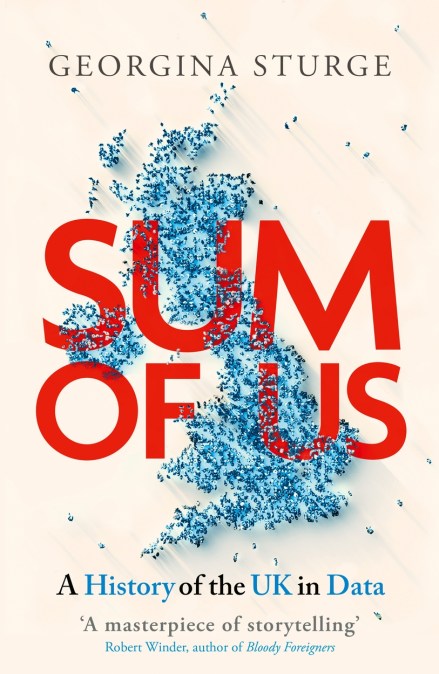
Georgina Sturge, House of Commons Library statistician and author of the critically acclaimed Bad Data, explores the rich history of the times the UK has counted itself – from the revolutionary first census of 1801 to modern worries over technological surveillance.
Condensing a whole society into numbers brought hidden problems to light: mapping cholera deaths in Soho led researchers to a single deadly water pump; Florence Nightingale stunned the Victorian establishment with her diagrams showing disease was the soldier’s hidden enemy; and the discovery that industries like firework-making were almost entirely staffed by women helped improve workers’ rights.
The census also reveals the people left out of the nation’s story. Records reveal the remarkable presence of escaped American slaves living in nineteenth century Leeds, and that by 1901 there were 600 professional Italian cooks in the UK. More recent data has acknowledged religion, ethnicity, and LGBT identity for the first time. Sturge also tracks those who have resisted the state’s attempts at tabulation – people burning survey forms, stripping naked in protest and, in the case of 500 Suffragettes, avoiding the 1911 census by skating all night round Aldwych roller rink.
Full of fascinating social detail, Sum of Us draws out the human stories captured in the vast tangle of data the UK has collected over two centuries. It provides a vital snapshot not of who we imagine ourselves to be – but who we really are.
Georgina Sturge, House of Commons Library statistician and author of the critically acclaimed Bad Data, explores the rich history of the times the UK has counted itself – from the revolutionary first census of 1801 to modern worries over technological surveillance.
Condensing a whole society into numbers brought hidden problems to light: mapping cholera deaths in Soho led researchers to a single deadly water pump; Florence Nightingale stunned the Victorian establishment with her diagrams showing disease was the soldier’s hidden enemy; and the discovery that industries like firework-making were almost entirely staffed by women helped improve workers’ rights.
The census also reveals the people left out of the nation’s story. Records reveal the remarkable presence of escaped American slaves living in nineteenth century Leeds, and that by 1901 there were 600 professional Italian cooks in the UK. More recent data has acknowledged religion, ethnicity, and LGBT identity for the first time. Sturge also tracks those who have resisted the state’s attempts at tabulation – people burning survey forms, stripping naked in protest and, in the case of 500 Suffragettes, avoiding the 1911 census by skating all night round Aldwych roller rink.
Full of fascinating social detail, Sum of Us draws out the human stories captured in the vast tangle of data the UK has collected over two centuries. It provides a vital snapshot not of who we imagine ourselves to be – but who we really are.
Reviews
A fascinating and often moving journey through British data-gathering from Domesday Book right up to modern day debates about ethics
From Domesday Book to modern census debates, Commons Library statistician Sturge explores how Britain has kept track of itself. Insightful and engaging, this is a smart, often surprising history of data, identity and the stories numbers can tell
Remarkable. A history of data-gathering that is also a masterpiece of storytelling. Georgina Sturge has illuminated Britain's social history with a searching beam of good sense, always sensitive to the poetry of actual fact
This book covers a formidable scope, does an excellent job of drawing human narratives from the numbers, and encourages a critical approach, highlighting how statistics can either illuminate or cloud our judgement, depending on how they are used