
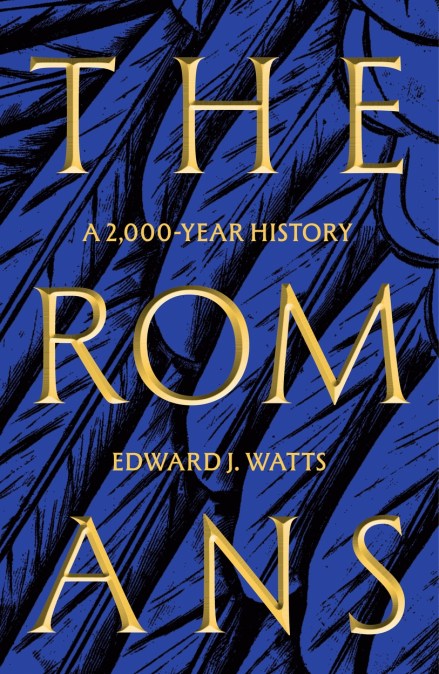
The Romans
On sale
18th June 2026
Price: £16.99
Genre
‘At last, a history of the Roman state as it has always been crying out to be told, and never has been’
RODERICK BEATON
‘A sweeping historical survey that spans two millennia’ WALL STREET JOURNAL
The definitive history of Rome and its citizens.
Rome is often remembered for its spectacular collapse. Yet for more than two thousand years – through civil wars, plagues, invasions and religious upheaval – the Roman state survived, adapted and reinvented itself. From a muddy settlement on the banks of the Tiber to the glittering court of Constantinople, this is the sweeping, untold story of a civilisation that refused to fall.
The Romans tells the first truly complete history of Rome in all its epic scale: the Punic Wars, the fall of the republic to the rise of Christianity, Alaric’s sack of Rome, the emergence of Islam and the Crusades that would ultimately bring the empire to an end. It is also the story of diverse men and women who shaped the empire: African emperors, Byzantine intellectuals, and ordinary citizens whose loyalty together made it the most resilient state the world has ever seen.
RODERICK BEATON
‘A sweeping historical survey that spans two millennia’ WALL STREET JOURNAL
The definitive history of Rome and its citizens.
Rome is often remembered for its spectacular collapse. Yet for more than two thousand years – through civil wars, plagues, invasions and religious upheaval – the Roman state survived, adapted and reinvented itself. From a muddy settlement on the banks of the Tiber to the glittering court of Constantinople, this is the sweeping, untold story of a civilisation that refused to fall.
The Romans tells the first truly complete history of Rome in all its epic scale: the Punic Wars, the fall of the republic to the rise of Christianity, Alaric’s sack of Rome, the emergence of Islam and the Crusades that would ultimately bring the empire to an end. It is also the story of diverse men and women who shaped the empire: African emperors, Byzantine intellectuals, and ordinary citizens whose loyalty together made it the most resilient state the world has ever seen.
Reviews
A sweeping historical survey that spans two millennia . . . Those intrigued by the ebb and flow of political power . . . will find in this book a cornucopia
The great achievement of this book is its scale. The coverage is vast and yet Watts deftly brings two thousand years of Roman history under one powerful arc of analysis. What it meant to be Roman was always in flux, but what made the Roman state so successful - its unique combination of resilience and adaptability - remained intact throughout
At last, a history of the Roman state as it has always been crying out to be told, and never has been! Not even Edward Gibbon, more than 200 years ago, covered the full 2,000-year span, as Edward J. Watts does here. And at last we learn the truth: that Rome's 'decline and fall' was brought about not by barbarian invaders from the east in the 5th and 6th centuries but by crusading Europeans from the Christian west in 1204. Watts tells this story with verve and aplomb, and a wealth of finely observed detail drawn from Roman historians' own accounts of their past
Here is the Roman story across two millennia, from the mists of the Iron Age to the medieval crusades. Sweeping and masterful, The Romans balances the themes of continuity and change, grand forces and individual characters. I'm often asked what one book on ancient Rome I would recommend - and now I have a new answer
Ed Watts tells the remarkable story of how Roman traditions of openness and flexibility allowed it to adjust and readjust to ever-changing circumstances over two millennia. Clearly written and well-informed, The Romans puts readers into direct contact with the voices of the Roman people over time, and will become a classic in its own right