
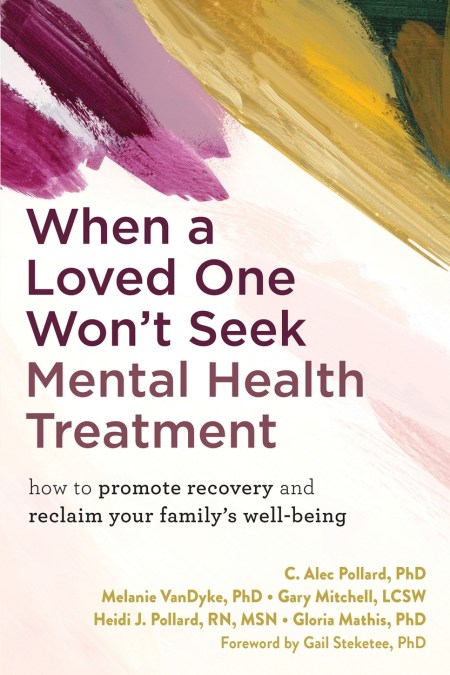
When a Loved One Won’t Seek Mental Health Treatment
On sale
27th June 2024
Price: £14.99
Genre
Complementary Therapies, Healing & Health / Coping With Illness & Specific Conditions / Self-help & Personal Development
Selected:
Paperback / ISBN-13: 9781648483134
When someone resists mental health treatment, the whole family suffers. Written by clinicians and introducing the innovative family well-being approach (FWBA), this essential guide provides validation and doable strategies for anyone who feels trapped by a family member or loved one suffering from mental illness. Using the practical skills outlined in this book, readers will learn how to help their loved one while improving their own emotional well-being.
Escape the “family trap,” help your loved one on the road to recovery, and take back your life.
If you have a family member who suffers from mental illness, but refuses to seek treatment, you may feel like you’re caught in a trap. If you try making life easier for your loved one, you wind up perpetuating dependency and entitlement. If you push for treatment, you are met with resistance or outright animosity. And when you reach out to professionals for help, you are told that nothing can be done unless your family member is ready to change. So, how can you escape the “family trap?”
Written by clinicians and introducing the innovative family well-being approach (FWBA), this essential guide provides validation and doable strategies for anyone who feels trapped by a family member or loved one suffering from mental illness. Using the skills in this book, you’ll learn how your responses to your loved one can worsen and even perpetuate the very problems you are trying to resolve. You’ll also discover ways to promote healthy behavior in recovery avoiders, but only after the whole family is emotionally and strategically prepared to follow through successfully.
The family well-being approach outlined in this book is based on established principles of behavior change, family interaction research, and more than three decades of clinical experience. If you’re feeling caught in a trap with a loved one who won’t seek help-also known as a recovery avoider-this practical guide can help you find your way out, once and for all.
Escape the “family trap,” help your loved one on the road to recovery, and take back your life.
If you have a family member who suffers from mental illness, but refuses to seek treatment, you may feel like you’re caught in a trap. If you try making life easier for your loved one, you wind up perpetuating dependency and entitlement. If you push for treatment, you are met with resistance or outright animosity. And when you reach out to professionals for help, you are told that nothing can be done unless your family member is ready to change. So, how can you escape the “family trap?”
Written by clinicians and introducing the innovative family well-being approach (FWBA), this essential guide provides validation and doable strategies for anyone who feels trapped by a family member or loved one suffering from mental illness. Using the skills in this book, you’ll learn how your responses to your loved one can worsen and even perpetuate the very problems you are trying to resolve. You’ll also discover ways to promote healthy behavior in recovery avoiders, but only after the whole family is emotionally and strategically prepared to follow through successfully.
The family well-being approach outlined in this book is based on established principles of behavior change, family interaction research, and more than three decades of clinical experience. If you’re feeling caught in a trap with a loved one who won’t seek help-also known as a recovery avoider-this practical guide can help you find your way out, once and for all.
Reviews
If you've pleaded, nagged, and threatened your loved one to seek help for their mental health condition but they never do, then When a Loved One Won't Seek Mental Health Treatment is the book for you. It's filled with thoughtful and effective strategies to decrease family distress, encourage your loved one to seek help, and, more importantly, to help you live fully even when your loved one will not.
This book is a true contribution to guide the many significant others impacted by a family member's mental health struggles in a practical and constructive way. Families are often the unintended casualty of recovery avoidance, and are typically left feeling helpless and hopeless. Pollard and his skilled interdisciplinary team provide a step-by-step plan to empower significant others to choose behaviors that promote family well-being without blame or judgement. Congratulations!
Recovery avoiders do NOT want to stay disabled. But they disappoint, inconvenience, and control their families in self-defeating ways. This is a sophisticated, compassionate, realistic look at how to improve the whole family's well-being. The authors describe gradually shifting from resentful accommodation and critical minimizing to incentivizing small, positive steps and refraining from unrealistic demands for change. Reducing the negative impact on the family ultimately opens the door to recovery.