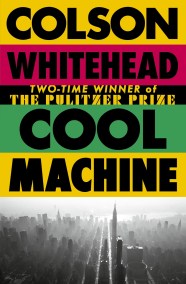
Cool Machine
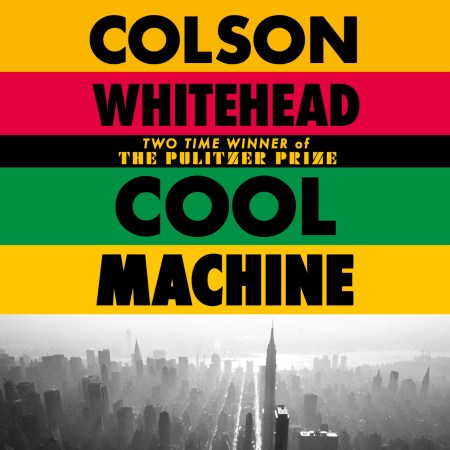
On sale
21st July 2026
Price: £29.99
‘Rejoice: the final instalment of the Harlem Trilogy is here’ TELEGRAPH
‘A hugely satisfying conclusion to a towering achievement’ FINANCIAL TIMES
‘Another tour de force . . . Whitehead’s Harlem trilogy deserves to become a touchstone of the modern American literary canon’ SPECTATOR
FROM THE #1 NEW YORK TIMES BESTSELLING AUTHOR AND TWO-TIME PULITZER PRIZE WINNER COLSON WHITEHEAD
AN EXUBERANTLY ENTERTAINING NOVEL THAT BRINGS 1980S NEW YORK TO VIVID, UNFORGETTABLE LIFE
1981. New York City is beginning to emerge from financial ruin and decline, energized by rampant real estate development and a Wall Street unchained by Reagan-era predatory capitalism. Up in Harlem, successful business owner/master fence Ray Carney has just been named Sterling Furniture’s Dealer of the Month. When the banks won’t give his beloved wife, Elizabeth, a loan for her new travel agency, however, Carney gambles on one last heist, and finds himself entangled with a legendary criminal mastermind.
1983. To some, Carney’s friend and partner in crime Pepper is a stone-cold sociopath. To others, a top thief with questionable people skills. Either way, he’s feeling his age in his troubled gut and his aching bones. When he takes on a bodyguard gig as a favor to Elizabeth, he’s plunged into the alien territory of the East Village art and club scene. Luckily for him, whether you’re uptown or down, everyone speaks the same language of violence – Pepper is a native speaker.
1986. Carney has always been haunted by his inability to save his cousin Freddie. Now, twenty years after Freddie’s death, he has a chance to rescue Freddie’s son from the violent forces of the city. But coming out of retirement and teaming up with Pepper again will mean risking the safety and security he’s spent decades building for his family, with only one shot to get it right.
With his usual pitch-perfect prose, Whitehead paints a portrait of a city in transition, where shimmering skyscrapers rise to the heavens as displaced people huddle in abandoned tunnels below. In a dazzling display of protean imagination, Cool Machine roves all over the city, from Windows on the World to Sugar Hill, to show that in New York, and in the lives of Whitehead’s vivid characters, it’s what’s below the surface that reveals the truth.
‘Surely one of the richest creations in crime fiction. Cracking’ DAILY MAIL
‘Colson Whitehead’s trilogy ends with a bang’ SUNDAY TIMES
‘An atmospheric, stylish finale’INDEPENDENT, BOOK OF THE MONTH
‘New York, in all its filthy, frenetic, shabby glory . . . New York has never had a better valentine’ THE ECONOMIST
‘A triumph of molls, dolls and deadpan humour’ STANDARD
‘Masterly’ MAIL ON SUNDAY
‘A literary heist’ TLS
‘Freewheeling fun’ GUARDIAN
‘Bustling with energy . . . a whirlwind read’ IRISH INDEPENDENT REVIEW
‘A hugely satisfying conclusion to a towering achievement’ FINANCIAL TIMES
‘Another tour de force . . . Whitehead’s Harlem trilogy deserves to become a touchstone of the modern American literary canon’ SPECTATOR
FROM THE #1 NEW YORK TIMES BESTSELLING AUTHOR AND TWO-TIME PULITZER PRIZE WINNER COLSON WHITEHEAD
AN EXUBERANTLY ENTERTAINING NOVEL THAT BRINGS 1980S NEW YORK TO VIVID, UNFORGETTABLE LIFE
1981. New York City is beginning to emerge from financial ruin and decline, energized by rampant real estate development and a Wall Street unchained by Reagan-era predatory capitalism. Up in Harlem, successful business owner/master fence Ray Carney has just been named Sterling Furniture’s Dealer of the Month. When the banks won’t give his beloved wife, Elizabeth, a loan for her new travel agency, however, Carney gambles on one last heist, and finds himself entangled with a legendary criminal mastermind.
1983. To some, Carney’s friend and partner in crime Pepper is a stone-cold sociopath. To others, a top thief with questionable people skills. Either way, he’s feeling his age in his troubled gut and his aching bones. When he takes on a bodyguard gig as a favor to Elizabeth, he’s plunged into the alien territory of the East Village art and club scene. Luckily for him, whether you’re uptown or down, everyone speaks the same language of violence – Pepper is a native speaker.
1986. Carney has always been haunted by his inability to save his cousin Freddie. Now, twenty years after Freddie’s death, he has a chance to rescue Freddie’s son from the violent forces of the city. But coming out of retirement and teaming up with Pepper again will mean risking the safety and security he’s spent decades building for his family, with only one shot to get it right.
With his usual pitch-perfect prose, Whitehead paints a portrait of a city in transition, where shimmering skyscrapers rise to the heavens as displaced people huddle in abandoned tunnels below. In a dazzling display of protean imagination, Cool Machine roves all over the city, from Windows on the World to Sugar Hill, to show that in New York, and in the lives of Whitehead’s vivid characters, it’s what’s below the surface that reveals the truth.
‘Surely one of the richest creations in crime fiction. Cracking’ DAILY MAIL
‘Colson Whitehead’s trilogy ends with a bang’ SUNDAY TIMES
‘An atmospheric, stylish finale’INDEPENDENT, BOOK OF THE MONTH
‘New York, in all its filthy, frenetic, shabby glory . . . New York has never had a better valentine’ THE ECONOMIST
‘A triumph of molls, dolls and deadpan humour’ STANDARD
‘Masterly’ MAIL ON SUNDAY
‘A literary heist’ TLS
‘Freewheeling fun’ GUARDIAN
‘Bustling with energy . . . a whirlwind read’ IRISH INDEPENDENT REVIEW
Reviews
Whitehead's justly celebrated Harlem Trilogy comes to a triumphant, satisfying conclusion... packing three page-turning thrillers into one book that's sustained throughout by rich, engaging characterizations and lucid, provocative reflections on a community, a city, and a people which it presents as both exasperating and captivating with equal intensity. A master novelist in full command of his powers as a storyteller, prose stylist, and social observer
This year sees Colson Whitehead conclude his Harlem trilogy, following up Harlem Shuffle and Crook Manifesto with Cool Machine, set in 1980's New York
A hugely satisfying conclusion to a towering achievement . . . this trilogy of unapologetic crime novels may be Whitehead's most important and affecting work yet
Freewheeling fun . . . The Harlem Trilogy, like its hero, is a cool-headed trickster, more ambitious and far-reaching than its dimestore façade would suggest . . . He takes a dark and dangerous corner of history and makes it feel illuminated, maginified, even borderline family-friendly . . . the grit and grandeur of 80s New York drive this rollicking story of an underground wheeler-dealer
There is a pleasing symmetry to the trilogy: three books spanning three decades, each divided into three episodes (part Divine Comedy, part Star Wars). In a recent profile in the New Yorker, Julian Lucas argued that there are three Whiteheads in the public imagination: the Gen X ironist, the New York City rhapsodist and the great American reckoner. They're all on the job in Cool Machine, wisecracking and safe-cracking their way through its pages. It's a literary heist that none of the author's alter egos could have pulled off alone: a three-man job
A superlative contemporary New York novel
It's about Harlem in the '80s. Colson Whitehead wrote three books about Harlem, one in the '60s, one in the '70s, and this is the last one. You do not need to have read the other two. Colson Whitehead is the best there is, period
Whitehead followed the double-whammy gut-punch of his Pulitzer-winning slavery novel The Underground Railroad and The Nickel Boys (about institutional child abuse) by relaxing into a series of New York crime capers that began with 2021's Harlem Shuffle. Cool Machine concludes the trilogy by bringing his morally complex antihero, Ray Carney - a family man with a double life trading stolen goods - into the 1980's and the era of "greed is good"
Two-time Pulitzer winner and the author of Oprah's 75th Book Club pick The Underground Railroad closes out his Harlem Trilogy with a swaggering trip through early '80s New York . . . Add old ghosts, bigger risks, and a city turning glossy and ruthless, and you've got Whitehead at his best
Colson Whitehead, one of America's most celebrated novelists, concludes his Harlem-set trilogy with protagonist Ray Carney and his family facing down fresh threats in a New York City transfigured by the whiplash of Ronald Reagan's conservatism. Throughout the 1980s, Ray and his partner in crime, Pepper, juggle heists and bourgeois aspirations, feeling the shiv of racism pressed against their fates. From rejuvenated uptown blocks to the East Village's high-octane art scene, Whitehead offers an ode to a majestic city and its diverse people
Carney is a perfect crime-fiction character because he straddles two worlds, neither entirely bent nor entirely straight . . . the trilogy's subject is not really Carney: it is New York, in all its filthy, frenetic, shabby glory . . . New York has never had a better valentine
Whitehead's Harlem Trilogy has easily been one of the high water marks for contemporary crime fiction, and the series comes to a fitting conclusion this year with Cool Machine, a wild march into 1980s New York . . . Whitehead is one of the most talented novelists of the era, and we're lucky he's taken on such a deeply felt, wildly entertaining project
Combining the pace of a crime novel with a portrait of New York, including its hidden underworld, the book is social drama, a fiction with a non-fiction spine. The book has shades of Tom Wolfe about it, if Tom Wolfe had been a very different writer, that is. Whitehead explores themes of race, class, identity, and social mobility. Cool Machine is both an engrossing heist story and a nuanced examination of the moral compromises people make in pursuit of a better, or at least more fully funded, life. It is also extremely funny . . . a triumph of molls, dolls and deadpan humour
[A] suave and streetwise triumph . . . Carney thinks that saving Robert will atone for Freddy's death. It brings the whole trilogy full circle in an immensely satisfying way. Whitehead just fizzes with ideas, from the role of looted hi-fi gear in the emergence of rap to the evolution of crime itself . . . I doubt any of our young tartan noir blades could write anything as intelligent, emotional, stylish, funny, incisive, wise and - dammit - cool as Cool Machine . . . A reader could not wish for more
Last month, I took four books with me for a weeklong beach trip, and I only read this one - slowly. I'm a big fan of Whitehead's Harlem Trilogy, and I think this closing volume is the best of the bunch
Don't be sad that Whitehead's rollicking Harlem trilogy is ending. Be happy that it exists and will remain endlessly re-readable as long as novels are around
With echoes of Ralph Ellison, James Baldwin and the blaxploitation movie Shaft, Cool Machine showcases a novelist at the height of his craft, working with cerebral glee, virtuosity and an abundance of love. Whitehead's Harlem Trilogy deserves to become a touchstone of the modern American literary canon
The novel, a nostalgic trip through 1980s street culture, is full of juice, from the heist-driven plot to the pinballing dialogue to the indelible portrait of New York and of Carney too - surely one of the richest creations in crime fiction. Cracking
The conclusion to Whitehead's Harlem trilogy finds the furniture salesman Ray Carney and his partner in crime, Pepper, navigating midlife, a changing city and, as always, a dubious scheme or two
A New York crime novel at its best
The plotting is intricate, the heists violent, the human fears palpable
The two-time Pulitzer laureate hits a high note with the conclusion to his Harlem trilogy
It did not disappoint. The new novel is the third in his Harlem trilogy, but you don't have to have read the previous two to be swept up in this sharp, noirish critique of New York, Black masculinity, commentary and sensory sketch of an evolving city, Cool Machine makes me want to go back and see what I missed
Bustling with energy . . . a whirlwind read, it is peppered with insights into race and pop culture, and overflows with satire and - perhaps surprisingly - humanity
Enormously enjoyable
Readers with an appetite for noir fiction and stylishly exuberant storytelling are rewarded with an atmospheric, stylish finale . . . Whitehead brings 1980s New York to vivid, unforgettable life
Drugs, rap and Reaganomics: Colson Whitehead's trilogy ends with a bang . . . In its totality the trilogy is far more than a series of capers. It is Whitehead's most sustained attempt to capture his native city - or, as he describes it, 'a monstrous entity powered by innate miseries, operated by brute will, and held together by pluck, fury and rebar' . . . Taken together, the books amount to a street-level social history of modern New York told through fences, gangsters, hookers, politicians, landlords, developers and dreamers - a Dickensian gallery of rogues through whom an entire metropolis comes into view
Two time Pulitzer Prize winner @ColsonWhitehead is a national treasure. When you are inside his pages, you are reminded of why over and over
Masterly
Every page is incandescent with longing, doubts, calculations, and determination as Whitehead's magnetic characters are pushed to the limits and the city roils. Whitehead gets every gritty, absurd, tender detail just right . . . This is a masterwork of crime fiction infused with labyrinthine suspense; brilliant, witty, and dynamic social insights; and profound questions of survival
Colson Whitehead has won the Pulitzer Prize two very well-deserved times, and Cool Machine is the latest in his staggeringly poignant oeuvre. New York City as it existed in the 1980s serves as the backdrop for this novel, and Whitehead masterfully leverages both its grit and glamour to stunning effect