
The Pilgrims’ Castle
On sale
21st January 2027
Price: £22
‘I love Jon Day’s writing’ OLIVIA LAING
One Amsterdam house. Many versions of the past. A family reckoning with the truth.
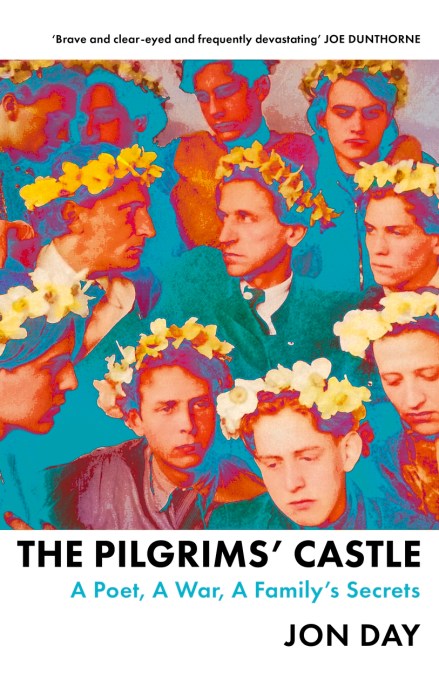
Growing up, Jon Day heard the same stories as everyone else. There was the grand canal house in Amsterdam where, during the Second World War, the exiled German writer Wolfgang Frommel had hidden young Jewish men from the Nazis. It was a place, his family said, of literature and poetry, courage and sacrifice, home to an extraordinary circle of artists and intellectuals known as Castrum Peregrini – the Pilgrims’ Castle.
But in that house, friendship didn’t always mean just friendship.
Talking to family, former members of the group and those who finally chose to break their silence, Day pieces together a very different story. Behind the celebrated legend lay a hidden world shaped by the inspiring yet dangerous teachings of the controversial poet Stefan George, where ideals of beauty and mentorship became entangled with manipulation, secrecy and sexual abuse.
As national memory collides with suppressed testimony, The Pilgrims’ Castle uncovers a secret history of wartime resistance, hidden coercion and the competing stories we tell ourselves to survive the past.
One Amsterdam house. Many versions of the past. A family reckoning with the truth.
Growing up, Jon Day heard the same stories as everyone else. There was the grand canal house in Amsterdam where, during the Second World War, the exiled German writer Wolfgang Frommel had hidden young Jewish men from the Nazis. It was a place, his family said, of literature and poetry, courage and sacrifice, home to an extraordinary circle of artists and intellectuals known as Castrum Peregrini – the Pilgrims’ Castle.
But in that house, friendship didn’t always mean just friendship.
Talking to family, former members of the group and those who finally chose to break their silence, Day pieces together a very different story. Behind the celebrated legend lay a hidden world shaped by the inspiring yet dangerous teachings of the controversial poet Stefan George, where ideals of beauty and mentorship became entangled with manipulation, secrecy and sexual abuse.
As national memory collides with suppressed testimony, The Pilgrims’ Castle uncovers a secret history of wartime resistance, hidden coercion and the competing stories we tell ourselves to survive the past.
Reviews
Brave and clear-eyed and frequently devastating, The Pilgrims' Castle is a profound and necessary account of family myth, the risks of charisma and how lies can be easier to live with than the truth
A gripping inquiry into a mythologised past that conceals dark secrets . . . As Day delves into the Pilgrims' Castle, he compels us to reassess not just the legacy of this particular artistic sect, but our own assumptions about twentieth century history, human power dynamics, and the truth of memory. An empathic, important, riveting book
The story, uncomfortably profound, is of coming to terms, via deeper and deeper layers of shock, with the ugliness and pain of the past, both in your own family and a nation. It centres on occupied Amsterdam. But beneath the many tragic lives - which touch more familiar ones, from Anne Frank to Hitler's would-be assassins - it exposes the way that poetry, and the romance of male friendship, can be used to mask abuse
Jon Day has turned a sordid story of dark romanticism, a fraught national history, and sexual abuse into a thing of beauty. A splendid achievement
An electric excavation of - and reckoning with - a fascinating and shocking history, bravely asking what we have to gain, and lose, from dislodging old secrets and unsmoothing the narratives that occlude the darkest aspects of the past
A fascinating and beautiful book, The Pilgrims' Castle is a haunting, and haunted, exploration of a family's complex hinterland . . . powerful, impressive, and compelling